My Dog Eats My Cat's Food. My Cat Eats My Dog's Food. Here's What I Learned.
My Dog Eats My Cat's Food. My Cat Eats My Dog's Food. Here's What I Learned.
If you have multiple pets, then you already know this: Managing two pets in one house isn’t an easy feat. It’s chaos.
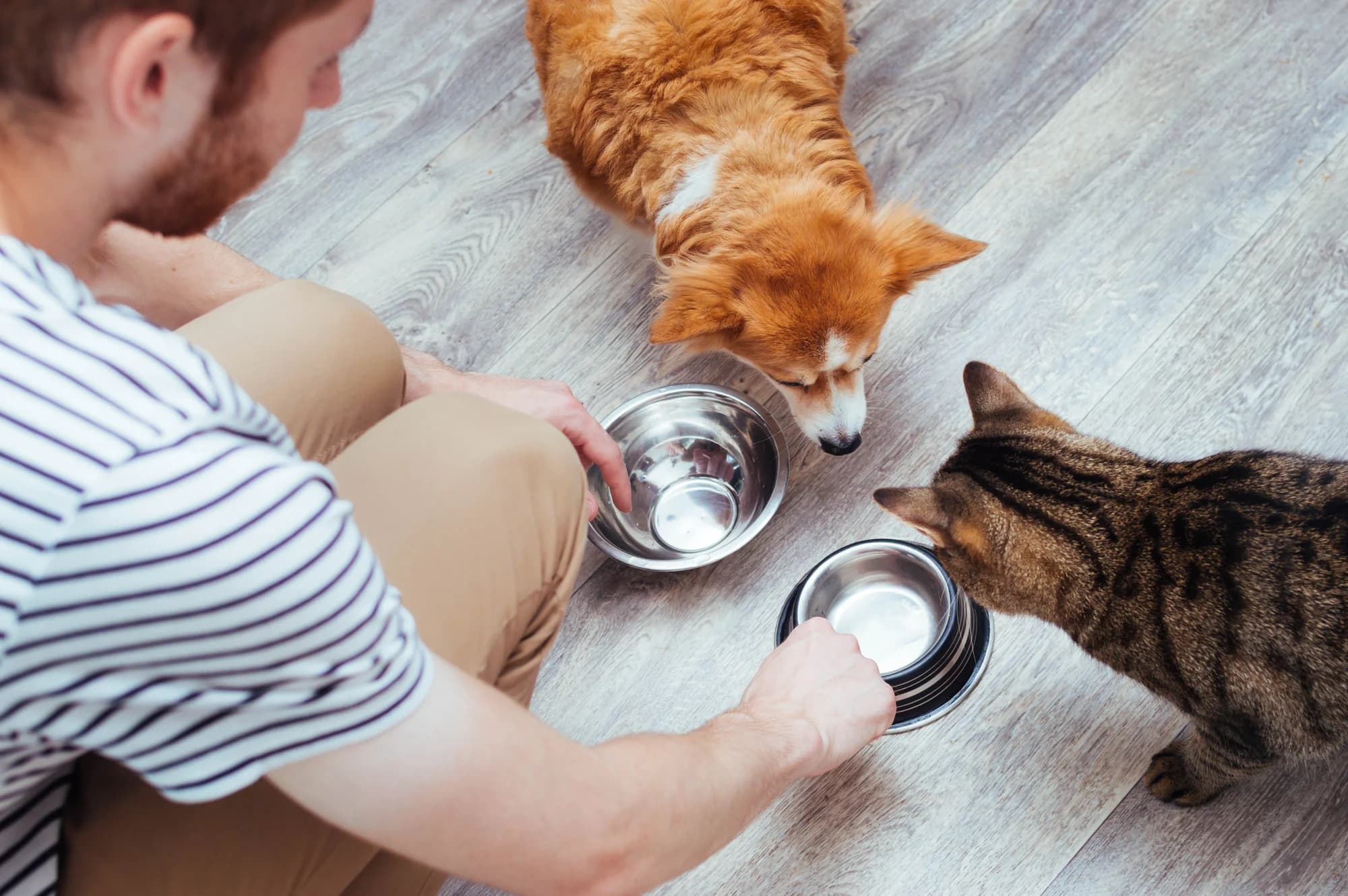
My dog is obsessed with my cat's food. My cat treats the dog's bowl like it's a personal buffet. Some days, I honestly have no idea how much either of them is actually eating.
For a long time, I just guessed. Then one day I noticed something strange.
My cat had gained about 300 grams. At almost the same time, my dog had actually lost weight.
I couldn't explain either change.
Was my dog skipping meals? Was my cat stealing them? Were they both eating from each other's bowls when I wasn't looking?
I realized I wasn't really managing their nutrition. I was making assumptions.
Then something happened that scared me even more.
I found my cat licking food that had spilled from my dog's bowl. The food contained medication prescribed for my dog. It was completely safe for him. But was it safe for my cat?
I had no idea.
That moment made me realize how difficult multi-pet households really are.
The Problem Nobody Warns You About
If you have both a dog and a cat, feeding time becomes a daily strategy game.
You feed the dog. The cat appears. You feed the cat. The dog finishes his own meal and heads straight for the cat's bowl. You separate them into different rooms. Someone cries. Someone scratches at the door. Someone still manages to steal food. Eventually, many owners give up and leave food available all day because it's easier.
The problem is that once everyone starts eating from everyone else's bowl, you lose track of everything.
If your dog gains weight, was it because of his own meals? Or because he was eating the cat's calorie-dense food? If your cat starts losing weight, is it stress? Is she eating less? Or is the dog finishing her meals before she gets there?
Without good data, every answer becomes a guess. And guessing isn't a good health strategy.
The Moment Borzi Becomes Essential
When I found my cat eating medicated dog food, I opened Borzi immediately. Instead of searching online and hoping I found the right answer, I simply opened the Safety Scanner and pointed my phone at the bowl.
A few seconds later, Borzi recognized what it was looking at and warned me that the ingredients and medication weren't appropriate for cats.
That single scan immediately changed my thinking.
It wasn't just telling me whether food was dangerous. It reminded me that safety depends on WHICH pet is eating it. That's an easy mistake to make in a busy household.
One bowl. Two pets. Very different nutritional needs. Separate Feeding Areas Changed Everything. After that day, I completely changed our routine. The dog now eats in the kitchen. The cat eats on a high shelf where the dog can't reach.
For the first time, I could actually tell who was eating what. Even then, I wasn't completely confident. Pets are creative. Dogs wait for leftovers. Cats explore everything.
So before introducing new food—or if medication is mixed into a meal—I use Borzi's Safety Scanner as a second opinion. It takes seconds. That's a lot faster than searching through articles while your cat is already sniffing the bowl.
The Weight Graph Told the Real Story
The biggest surprise came from Borzi's weight tracker. Instead of weighing my pets only during annual vet visits, I started logging their weight every week.
After several weeks, the trend became obvious. Both pets were slowly gaining weight. At nearly the same rate. That graph explained everything. They weren't simply eating their own meals.
They were helping themselves to each other's food too.
Without the graph, I probably wouldn't have noticed until one of them became visibly overweight. The numbers caught the problem long before my eyes did.
Your Home Has Different Risks for Different Pets
Food wasn't the only issue. Once I started paying attention, I realized how many everyday household items affect dogs and cats differently. Some plants that cause mild stomach upset in dogs can be much more dangerous for cats. Certain medications prescribed for one pet should never be shared with another. Even common household foods have completely different risk profiles depending on the species.
That's another reason I regularly use Borzi's Room Scan. Instead of trying to remember hundreds of dangerous plants, foods, medications, and household items, I can simply scan a room and let the AI point out anything worth checking.
It's much easier than relying on memory.
What Changed for Me
The biggest difference wasn't just safer feeding. It was peace of mind. Before, I constantly wondered:
"Are they eating the right amount?"
"Did one of them steal the other's dinner?"
"Could something in the house be dangerous?"
Now I have a simple routine.
• Weekly weight tracking.
• Separate feeding areas.
• Food scans whenever I'm unsure.
• Regular Room Scans to spot household hazards.
• Health logs I can actually share with my vet.
Instead of guessing, I have information.
Five Lessons Every Multi-Pet Owner Should Know
1. Don't assume you know who is eating what.
2. Dog food isn't automatically safe for cats—and cat food shouldn't become your dog's regular diet either.
3. Small weekly weight changes tell a much bigger story than annual weigh-ins.
4. Your home may contain hazards that affect each species differently.
5. Good data makes vet visits far more productive than relying on memory alone.
My Pets Today: Three months later, both pets are maintaining healthy weights. Their meals stay separate. I know exactly what they're eating. And whenever something new enters the house—a food, a medication, or even a plant—I don't guess anymore. I scan it with Borzi first.
If You Have More Than One Pet, Start Here
Feed your pets separately whenever possible. Track their weight consistently. Scan unfamiliar foods, medications, and household items before assuming they're safe. And bring your Borzi logs to your next vet appointment.
Because managing two pets shouldn't depend on memory alone.
The more you know, the safer both of them become.
Resources
- ASPCA Animal Poison Control Center
- Pet Poison Helpline - Multi-Pet Households
- FDA Pet Food Safety Guide
- American Veterinary Medical Association - Pet Obesity
This article is for informational purposes only and does not replace professional veterinary advice. Always consult your veterinarian for medical decisions.
Ready to monitor your pet's health?
Download Borzi for daily health logs, AI observations, and vet-ready notes in one app.
Download on the App Store